
Discover the Argolic Gulf: A Brief Overview of its History and Identity
While the Argolic Gulf may not have the broad international name recognition of the Strait of Salamis or Corinth Canal, few other Greek waters of comparable size can claim to combine more elements of Greece’s storied history and diverse natural wealth.
It was from the shores of the Argolic that ships of the Mycenaean fleet set off on their legendary campaign against Troy, according to Homeric accounts. While the reality behind these legends remains a matter of debate, it is undisputed that here rose one of the earliest European civilizations, with the Mycenaeans dominating land and sea in the northern Peloponnese and beyond from approximately 1600–1100 BC.
Yet even before the great palaces of Mycenae and ancient Tiryns (near Nafplio) were erected, humans had already lived in the area for tens of thousands of years; stone tools found in Franchthi Cave near the settlement of Koilada on the Argolic Gulf show that it was inhabited over 40,000 years ago.
The prehistoric and ancient inhabitants of Argolis benefited from a land almost tailor-made for human habitation. A mild climate limited the privations of the winter months compared to more northern areas. Forested hills and mountains teemed with wild game; rivers and springs provided ample fresh water, while valleys and floodplains with fertile soils facilitated the development of agriculture. Meanwhile, the gulf itself would have featured an abundance of fish and marine life far greater than that seen today, with intact ecosystems that have now been severely degraded or replaced.
Yet from the Bronze Age onwards, the sea would be the source of an even more significant source of wealth, one that would play a key role in shaping the history of this corner of the Peloponnese through antiquity and the Middle Ages right up until the modern era. From the days when the Mycenaeans would set sail from the shores of ancient Tiryns in ships carrying olive oil and wine destined for locations all around the Mediterranean Basin, the Argolic Gulf’s strategic position on key Mediterranean trade routes shaped its people’s fate.
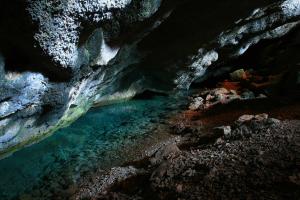
The Argolic Gulf’s historical strategic importance is evidenced in the numerous coastal fortifications built and refined over the centuries by the ancient Greeks, Byzantines, Franks, Venetians and Ottomans, the most important of which was that of Nafplio. It also helped lead to the development of the great shipbuilding and shipping industries that peaked on the islands of Spetses and Hydra in the 18th and 19th centuries.
The great wealth and knowledge amassed by these islands’ captains and craftsmen through maritime trade in turn would prove instrumental in Greece’s struggle for independence from Ottoman rule and the establishment of the modern Greek state. Nafplio, of course, would go on to become the seat of the first Greek government led by Ioannis Capodistrias.
Yet this period would mark the beginning of the end of the relative strategic importance of Nafplio and the Argolic Gulf in general. Capodistrias was assassinated in Nafplio in 1831 leading to a period of unrest, and in 1834, King Otto decided to move the capital to Athens, leading to an inevitable decline in Nafplio’s influence. Meanwhile, the advent of iron-built steamships and changes in international shipping saw the relevant industries of Spetses and Hydra enter a decline from which they would never recover. After millennia, the age of the strategic importance of the Argolic Gulf for international trade had finally come to an end.
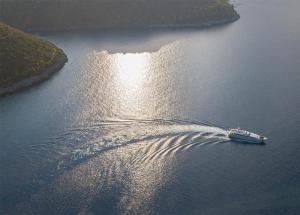
In the 20th century, following the end of WWII and the Greek Civil War, tourism – both international and domestic – began to grow in importance for the communities around the Argolic Gulf, and today it constitutes the single most important sector of the local economy.
Yet it must be noted here that – due in part to the area’s complex history – tourism (and not only tourism) has developed largely in the absence of plans at the regional level; to the extent that any such strategic plans which do exist, they tended to be at a municipal or community level. As such, the Argolic Gulf itself is rarely treated as a destination in its own right, with individual destinations such as Spetses, Hydra, Porto Heli and Nafplio being viewed – often by the residents themselves – as distinct entities with little in common, despite their geographic proximity and interwoven historical trajectories.
As such, a key challenge for the Argolic Gulf Environment Foundation as it seeks to promote environmental regeneration and eco-friendly practices across the region will be to help forge a common sense of purpose among the many different communities that share this region of the Peloponnese, each of which has its own distinct character and historical peculiarities.
Here every crumbling castle wall and ancient gravesite has many stories to tell. Yet all are bound together by one deep blue sea.